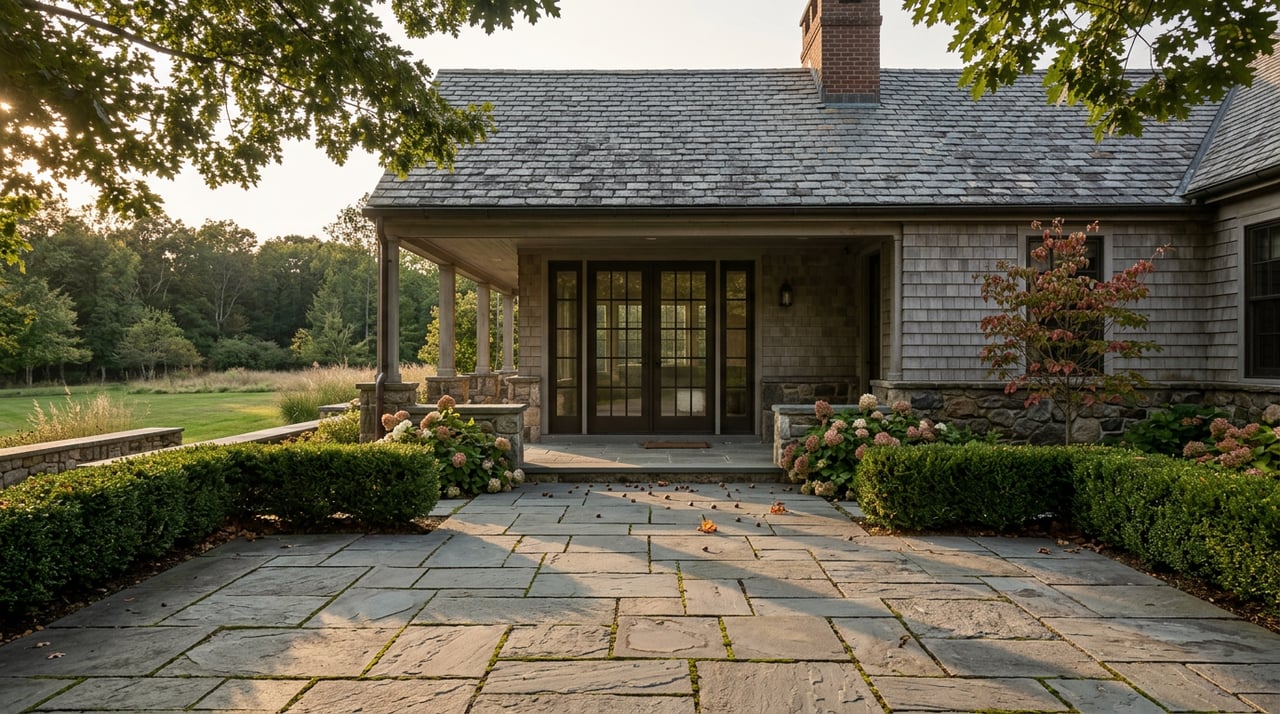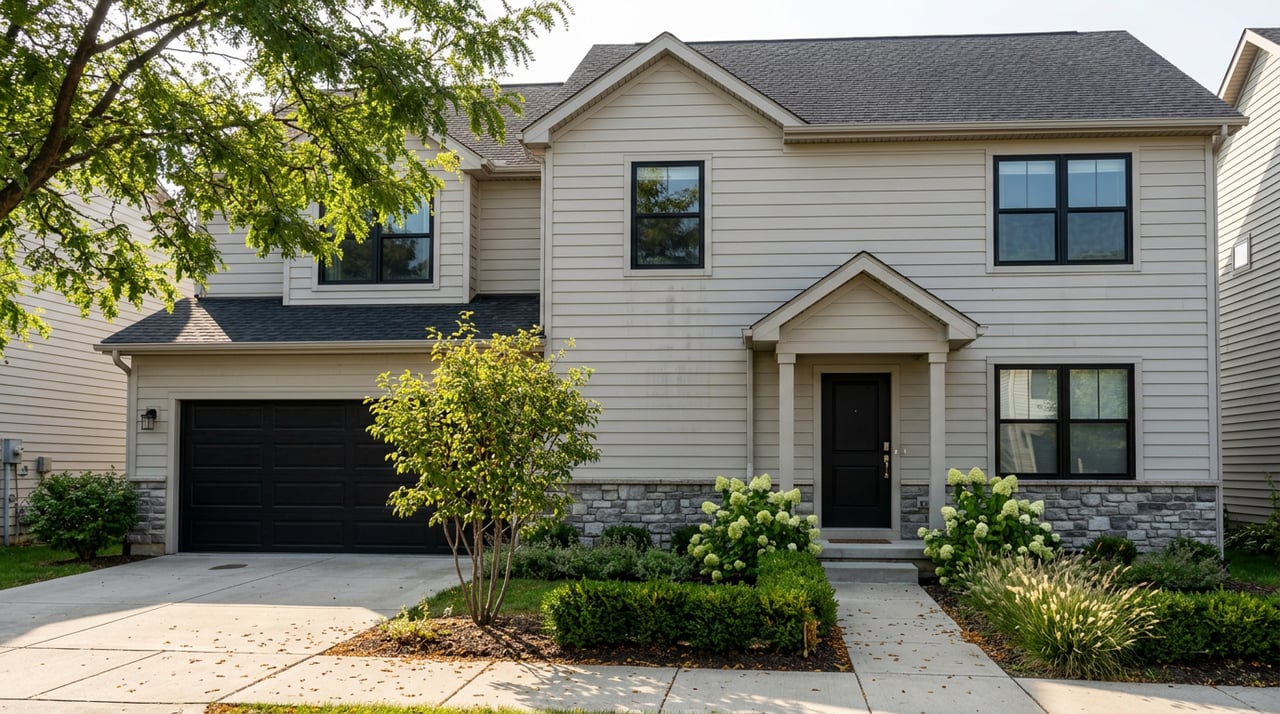
Drive west on Beverly Road in Hoffman Estates this summer and you'll pass two active construction sites within about two miles of each other. One used to be Sears' national headquarters. The other used to be AT&T's. Neither company is coming back, and what's replacing them is going to shape home prices in this town over the next two years more than any single median-price headline can capture.
That's the problem with looking up "Hoffman Estates home prices" and stopping at the first number you see. Depending on which portal you check and which week you check it, that number lands anywhere from the high $370,000s to the mid $430,000s. None of those figures is wrong exactly. They're just describing a market that's in the middle of splitting into pieces, and the median is the average of pieces that don't have much in common anymore.
Two dead campuses, two very different second acts
Sears moved its headquarters into a 273-acre Hoffman Estates campus in 1992 and moved back out for good after the company's 2021 exit. The site sat until Dallas-based Compass Datacenters bought it and began demolition. By late 2025, the old Sears buildings were gone and construction had started on the first two of five planned data center buildings, each exceeding a quarter million square feet, in a project the company and the village have pegged at roughly $10 billion in eventual investment. There's no retail here, no walkable street life planned, and no residential component. It's industrial infrastructure on a former office footprint, and its effect on housing is indirect: construction jobs now, a long-term tax base shift later, but no new homes going up on that side of town.
The AT&T campus a few miles away is the opposite story. New Jersey developer Inspired by Somerset Development bought the 1.65-million-square-foot former AT&T headquarters for $21 million in 2019, a steep discount from the $338 million it sold for in 2005, and rebuilt it as "Bell Works Chicagoland," a mixed-use "metroburb" combining office space, retail, a food hall, and now housing. The east side of the building reached close to full occupancy by late 2025. Construction on the west side, adding roughly 500,000 more square feet of office and retail, is slated to wrap by the third quarter of 2026. And on a 20-acre residential parcel at the edge of the campus, Pulte Homes is building 164 townhomes, with a nearly 300-unit apartment building planned for the same district.
One campus is becoming server racks. The other is becoming a small downtown with homes attached. That contrast is the reason a single median price can't tell you much about what's actually for sale in Hoffman Estates right now.
The number the portals can't agree on
Here's where the disagreement shows up in the data itself. Zillow's typical home value estimate for Hoffman Estates sits around $380,000, up 4.8% over the past year. A separate automated valuation model, WalletInvestor, put the median around $384,550 as of late May 2026, close to Zillow's figure. Movoto's August 2026 listing data, by contrast, puts the median asking price at $434,000, more than $50,000 higher. These aren't competing claims so much as different instruments measuring different things: the valuation models estimate typical value across the whole housing stock, while the listing median reflects whatever is actually asking a price on the market right now. When a town's inventory is this mixed, that gap between "typical value" and "current asking price" widens, because asking prices increasingly reflect what's newly built and what isn't.
Underneath that citywide number, four distinct price bands are doing four distinct things:
| Segment | Approximate price point | What it tells you |
|---|---|---|
| Condos | Median listing near $180,000 | The true entry point, largely untouched by the campus redevelopments |
| Resale townhomes | Median listing near $350,000 | Existing stock, priced well below what's now being built new |
| Resale detached homes | Median $400,000–$434,000 depending on source and month in 2026 | The broadest and most competitive segment, where most of the town's transaction volume happens |
| New-construction townhomes at Bell Works | $521,990 to about $692,000 | A brand-new tier with no direct comparable in the resale market |
A specific example makes the resale side concrete: in the Highlands-Schaumburg neighborhood within Hoffman Estates, homes were listing between $355,000 and $524,900 as of June 2026, with a median around $349,950. That's a normal, mature resale pocket. It has almost nothing in common with a 1,980-square-foot Pulte townhome a few miles away listing for $524,990 to $556,000, three stories, two-car garage, steps from a food hall and coworking space that didn't exist five years ago.
Why this isn't organic growth
None of this redevelopment happened because Hoffman Estates simply ran out of land or because demand quietly built up until someone noticed. It happened because the village structured tax increment financing to make it happen. The Grand Reserve apartment project, a separate 335-unit complex rising on the former Menards site at Barrington Square Town Center, was approved with eligibility for $8 million in TIF funding. The TIF district itself was frozen at 2012 tax levels, after the original Menards building came down, and runs through 2035. Any additional tax revenue the improved property generates between now and then flows into a fund for public improvements rather than straight to the usual taxing bodies. Bell Works Chicagoland's redevelopment relied on a similar TIF partnership with the village, estimated to eventually cover close to 30% of the total project cost.
That's the mechanism worth understanding if you're comparing Hoffman Estates to a suburb where growth has been more gradual. The village isn't waiting for market forces to slowly absorb three dead or underused corporate sites. It's using tax financing to front-load the risk so developers build now, in defined phases, at scale, rather than piecemeal over a decade. New supply here doesn't trickle in one flip or one infill lot at a time. It arrives in blocks of 164 townhomes, or 335 apartments, or five data center buildings, each on its own construction schedule but all converging on the same few square miles at the same time.
Even the developer frames it as more than a real estate play. As Ralph Zucker, the CEO behind Bell Works Chicagoland, put it to the Chicago Sun-Times, longtime residents keep walking in and telling him, "I never knew this place was so cool." That reaction is the point of a metroburb model built on public financing: it's designed to change how a place feels to the people already living near it, not just to add square footage.
What this means if you're actually shopping here
If you're comparing a resale detached home in the $400,000s against a new Bell Works townhome in the $520,000s to high $600,000s, you're not really competing in the same market segment, and you shouldn't expect the same negotiating dynamics. Resale detached homes in Hoffman Estates have been trading in a competitive environment, with multiple offers common on well-priced listings. New construction pricing, by contrast, is set by the builder and tends to move on incentives and lot premiums rather than bidding wars, at least while inventory is still coming online through 2026.
If you're an investor or landlord watching rental supply, the 335 units at Grand Reserve and the roughly 300 planned apartments at Bell Works represent a meaningful new supply of professionally managed rentals entering the same submarket over a similar timeframe. That's worth factoring into any rent comp you pull for existing rental property nearby, since a wave of new, amenity-heavy units, complete with pool and pickleball courts at Grand Reserve, can shift what renters expect at a given price point even before the buildings are fully leased.
And if walkability and daily errands matter to you, location within Hoffman Estates now means something more specific than it used to. Buying near the Bell Works corridor puts you within walking distance of a food hall, retail, and event space that didn't exist a few years ago. Buying near the former Sears campus puts you near a large, quiet industrial site with limited foot traffic by design. Same town, different daily experience, and the median price doesn't distinguish between the two.
Before you tour anything in this corridor
A few things worth confirming before you get attached to a specific listing or new-construction unit:
- Ask which elementary, middle, and high school attendance boundary applies to the specific address. Bell Works' residential district falls within Barrington School District 220, which is not the district that serves every part of Hoffman Estates.
- If you're looking at new construction, ask for the current phase completion timeline rather than the original one. Both the Bell Works west-side expansion and the Compass Datacenters buildout have moved through multiple construction milestones since they were first announced.
- If you're comparing a resale home to new construction on price per square foot, factor in that HOA structures and amenity packages differ significantly between an established resale townhome and a brand-new one still building out its shared spaces.
- If proximity to the data center campus matters to you, ask about it directly. It's five buildings on nearly 200 acres with no retail component, and its effect on nearby streets and utilities will be different from a mixed-use development like Bell Works.
The median price for Hoffman Estates will keep moving as these projects finish, and it will keep being a rough average of markets that don't behave the same way. Knowing which of the three or four you're actually shopping in is worth more than watching that single number tick up or down.
If you want a clearer read on how a specific listing or price point fits into this shifting picture, Alka Patel has been working buyers and sellers through the Northwest suburbs for 13 years and can walk you through what's actually happening block by block. Let's Connect.